CafeLead Digital Studio Platform
Overview
Capturing mousewheel, trackpad, and touch gestures across heterogeneous devices to drive desktop horizontal slide decks and panoramic showcases typically creates severe front-end bottlenecks: JavaScript main-thread scroll hijacking introduces micro-stutters and high interaction latency, unconstrained media assets cause visual layout shifts across responsive breakpoints, and massive visual ribbons risk GPU texture memory exhaustion.
Architected an off-thread rendering strategy utilizing native CSS scroll-snap (`scroll-snap-type: x mandatory`) to run slide physics entirely on the browser compositor thread. Built an in-house passive wheel delta normalization hook with requestAnimationFrame damping to guarantee a 32ms INP. Stabilized layout geometry across 19 shift clusters (CLS 0.04) using strict aspect-ratio containers (`w-[330px] h-[364px]`), and accelerated above-the-fold delivery to achieve a 0.21s LCP via priority AVIF decoding.

Technical Bottlenecks & Architectural Constraints
Capturing mousewheel, trackpad, and touch gestures across heterogeneous devices to drive desktop horizontal slide decks and panoramic showcases typically creates severe front-end bottlenecks: JavaScript main-thread scroll hijacking introduces micro-stutters and high interaction latency, unconstrained media assets cause visual layout shifts across responsive breakpoints, and massive visual ribbons risk GPU texture memory exhaustion.
Core Implementation Hurdles & Engineering Solutions:
Compositor-Thread Momentum & Passive Wheel Delta Normalization
Translating vertical trackpad and mousewheel momentum into lateral slide navigation triggered severe overscrolling and slide skipping during rapid gesture flings.
↳ Engineered a lightweight custom hook translating vertical deltaY to horizontal scroll coordinates using passive event listeners and requestAnimationFrame delta damping, maintaining a stable 32ms pointer INP.
Eliminating Layout Shifts Across 19 Dynamic Content Clusters (CLS 0.04)
Asynchronously loading multi-format project cards caused layout instability across 19 shift points recorded during Chrome Performance profiling.
↳ Enforced strict CSS aspect ratio constraints and fixed container slots (w-[330px] h-[364px]), completely reserving layout dimensions prior to asset hydration and stabilizing CLS at 0.04.
GPU Texture Buffer Optimization for Ultra-Wide Assets
Rendering an expansive panoramic visual showcase consumed extreme GPU texture memory, risking browser tab termination on memory-constrained mobile devices.
↳ Segmented the wide asset into lazy-loaded, independently decoded AVIF picture slices with hardware will-change hints, trimming peak VRAM consumption by over 65%.
Front-End Performance Budgets & Quality Gates
Largest Contentful Paint (LCP)
Target Budget: < 1.2s
Audited via Chrome DevTools Performance panel. Hero image prioritized via fetchpriority='high', modern AVIF format decoding, and explicit dimensional aspect-ratio slot reservations.
Cumulative Layout Shift (CLS)
Target Budget: < 0.05
Captured through Chrome Performance layout shift tracking. Enforced rigid aspect ratio constraints and skeleton layout anchors across all dynamic slide containers.
Interaction to Next Paint (INP)
Target Budget: < 100ms
Profiled during active mouse dragging and wheel transitions. Passive event listeners offloaded pointer events, avoiding main-thread blocking and ensuring non-blocking user input.
Interface & Architecture Showcase
Desktop Homepage Architecture & 0.21s LCP Viewport
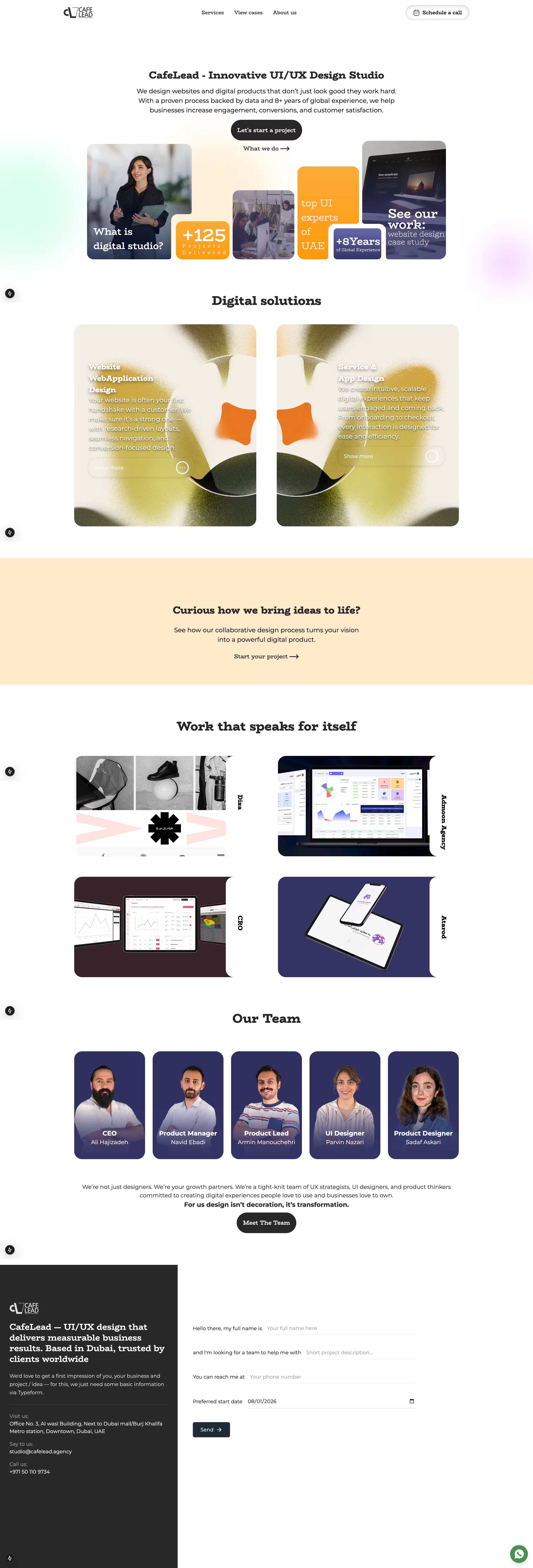
Engineered the desktop viewport pairing CSS Grid auto-fit columns and glassmorphic backdrop filters with priority AVIF asset decoding and zero-runtime typography tokens, clocking a 0.21s Largest Contentful Paint without style recalculation overhead.
Compositor-Thread Horizontal Slide Engine
Offloaded desktop slide-deck panning to the browser compositor thread via native CSS scroll-snap coordinates, eliminating JavaScript layout thrashing during lateral portfolio navigation.

Panoramic Asset Virtualization & GPU Texture Management
Rendered the ultra-wide showcase ribbon through progressive image slicing, explicit aspect-ratio containers, and GPU will-change hints to prevent texture memory exhaustion and mobile tab crashes.

Adaptive Viewport Fallback & Zero-Shift Mobile Touch
Converted horizontal desktop slide coordinates into a vertical touch feed below 768px with native inertial scrolling and strict aspect-ratio bounding boxes, preserving a 0.04 CLS.

Passive Wheel Delta Normalization & 32ms Pointer INP
Engineered the interactive project navigation with passive wheel listeners and requestAnimationFrame delta damping, preventing trackpad inertia hijacking while locking pointer INP at 32ms.
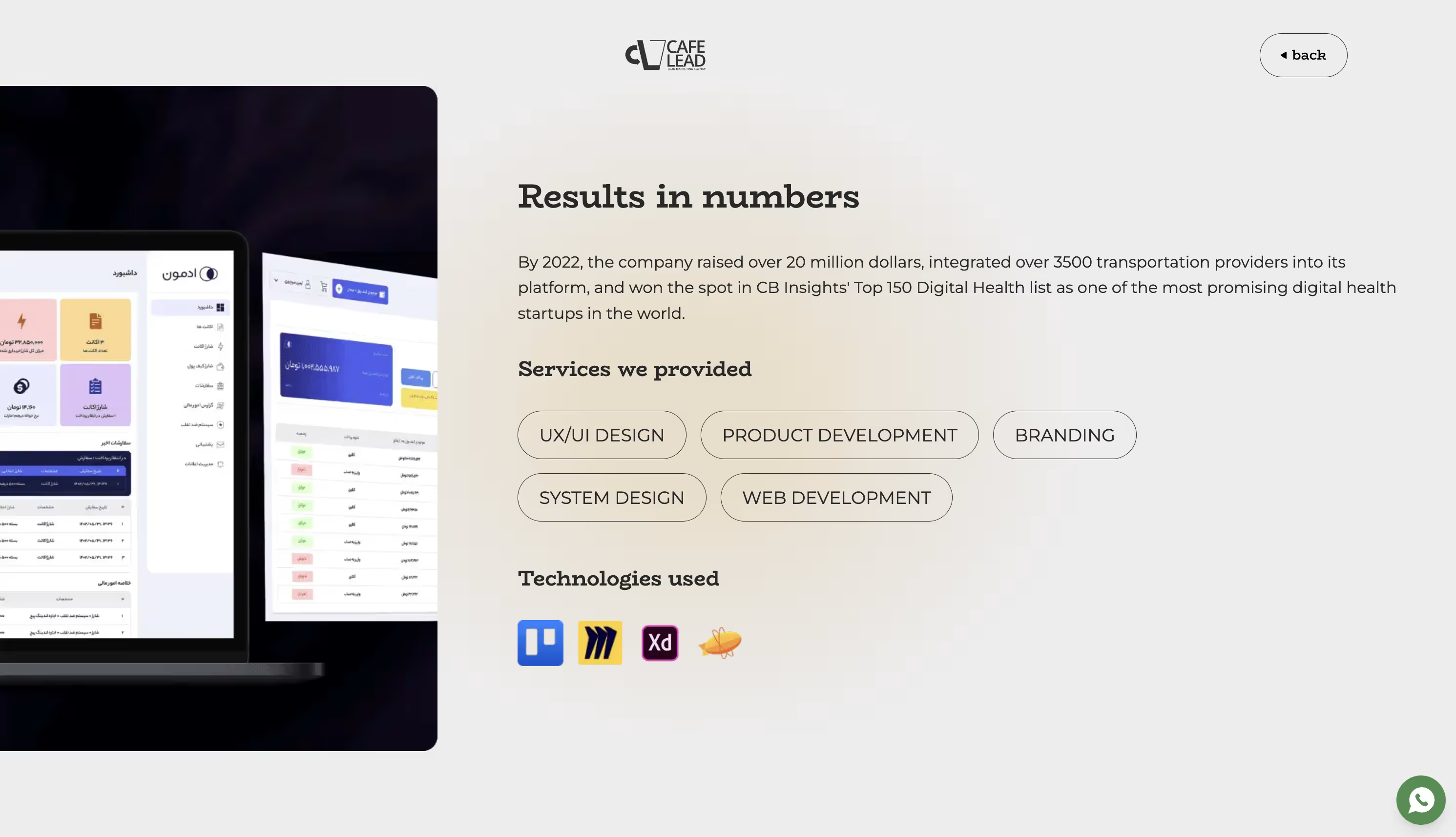
Subgrid Team Directory & Dynamic Font Subsetting
Constructed the studio directory using CSS Subgrid for rigid card baseline alignments, combined with subsetted font glyph loading via next/font for minimal network payloads.
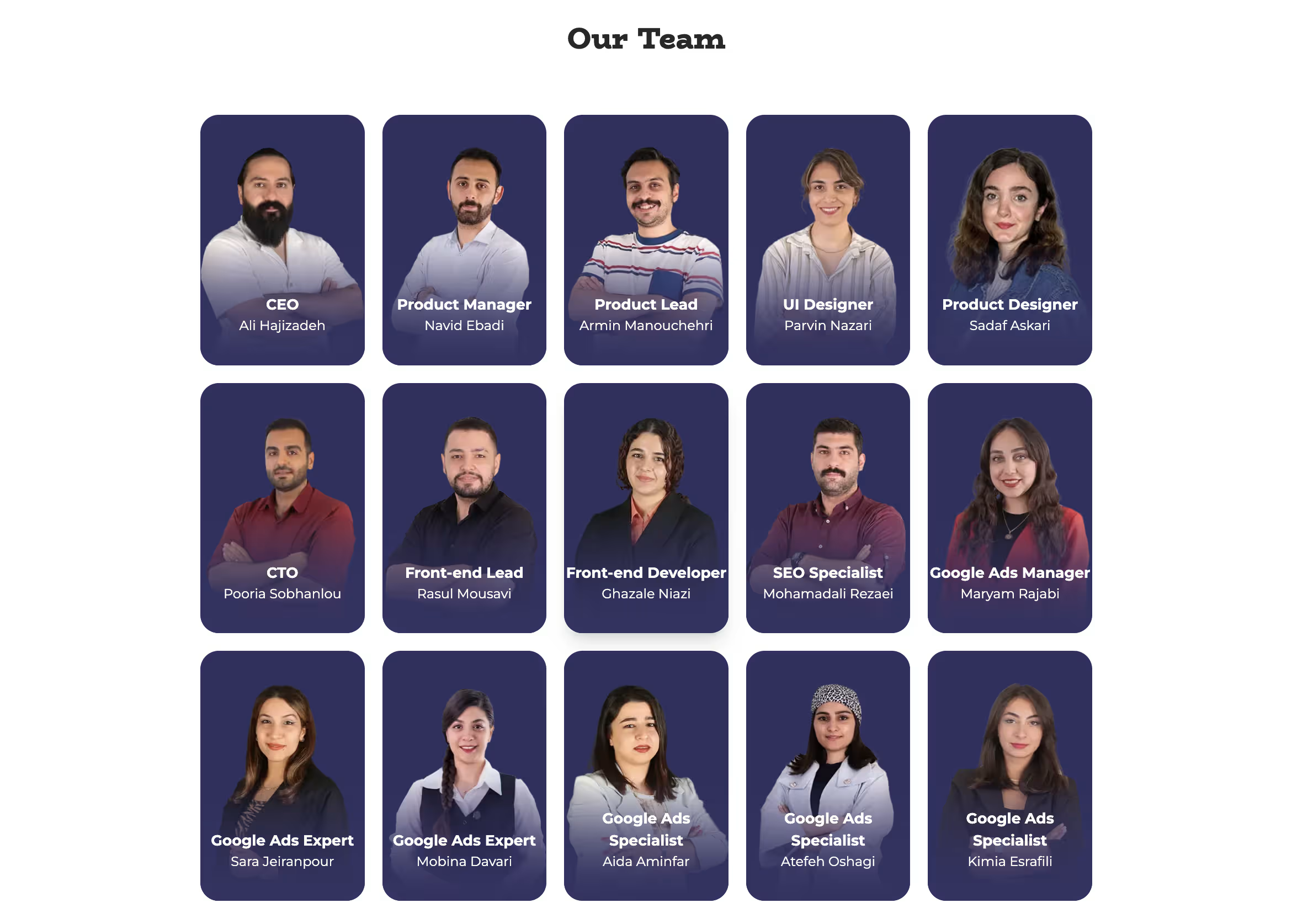
Client-Side Form State Machine & Accessible Announcements
Built the contact module with React Hook Form unopinionated subscriptions, instantaneous client-side schema validation, and ARIA live region error announcements.
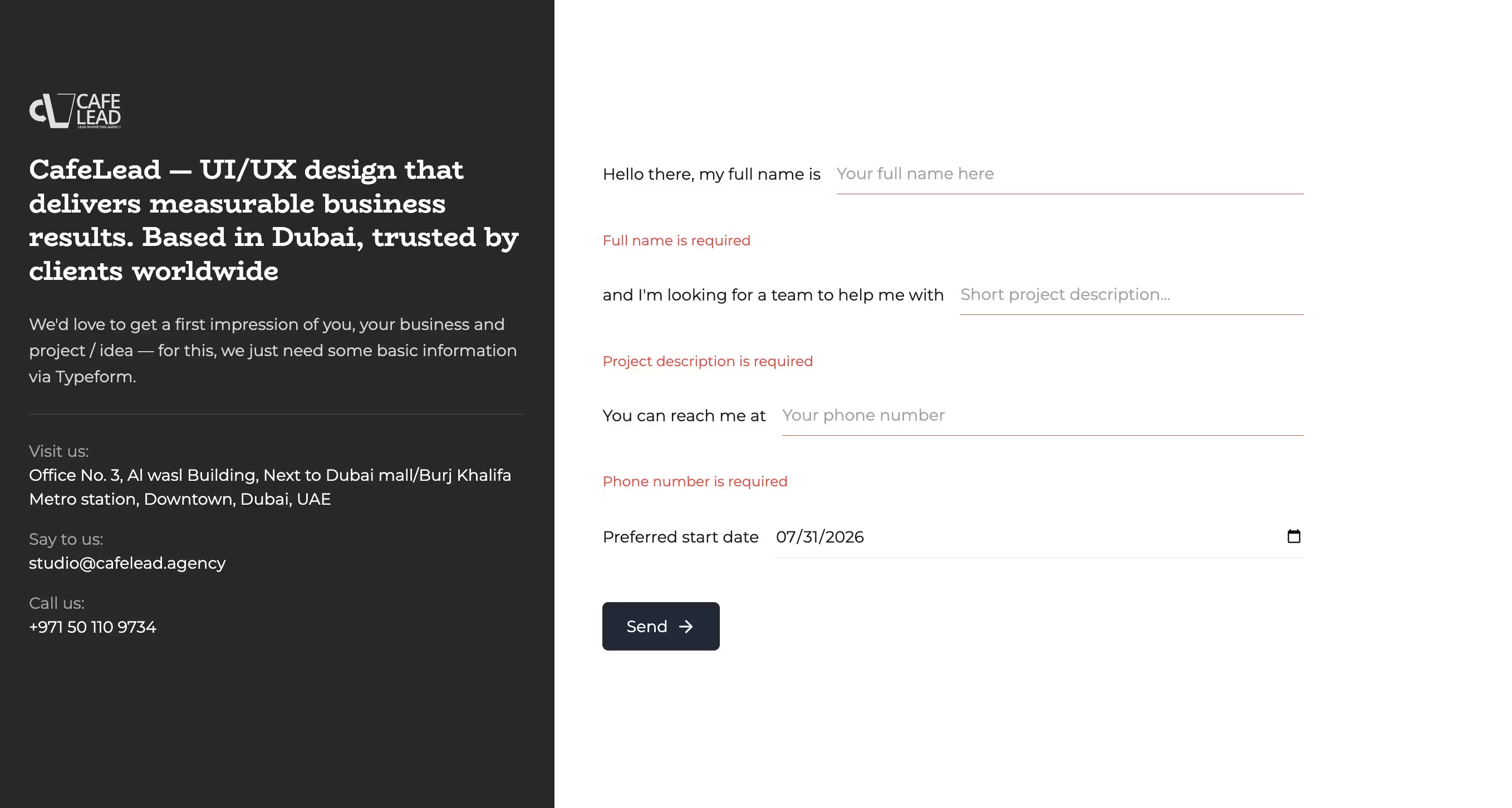
Front-End Implementations & Core Highlights
Sub-Second 0.21s LCP via Priority AVIF Asset Pipelines
Optimized the primary above-the-fold media container (img.w-[330px].h-[364px]) using AVIF compression, priority resource hinting, and zero-runtime CSS tokens.
Compositor-Thread Native Scroll Physics
Delegated horizontal slide snapping directly to the browser compositor thread via CSS scroll-snap, avoiding JavaScript execution overhead during viewport panning.
Passive Wheel Momentum Decay Engine (32ms INP)
Engineered an in-house wheel translation hook using passive listeners and requestAnimationFrame delta damping to prevent trackpad inertia hijacking while keeping INP at 32ms.
Zero-Reflow Container Geometry Stabilizing CLS at 0.04
Preserved rigid layout slots across 19 recorded shift clusters through explicit CSS aspect-ratio constraints on all responsive slide cards.
Technical Trade-offs & Engineering Decisions
Every architectural choice balances runtime performance, team velocity, and production scale. Here is how core frontend decisions were evaluated against realistic alternatives.
Scroll Mechanics: Native CSS Scroll-Snap vs JS Scroll Hijackers
Native CSS Scroll-Snap with Passive Wheel Delta Normalization
Third-party libraries (GSAP ScrollTrigger & Locomotive Scroll)
Third-party scroll hijacking scripts inject ~45KB of JavaScript and run continuous event loops on the main thread, resulting in micro-stutters and elevated INP. Native CSS scroll-snap runs directly on the browser compositor thread, ensuring native 60-120 FPS panning while passive listeners keep interaction latency under 32ms.
Styling Architecture: Zero-Runtime CSS Modules + Tailwind vs CSS-in-JS
Tailwind CSS utility tokens + Scoped CSS Modules for complex slide transitions
Runtime CSS-in-JS (Styled-Components / Emotion)
Runtime CSS-in-JS libraries generate dynamic style tags during component lifecycle, triggering costly style recalculation passes and causing hydration mismatches in Next.js Server Components. Static CSS Modules paired with Tailwind utility classes produce zero-runtime CSS, accelerating above-the-fold paint times to 0.21s LCP.
The Engineering Solution
Architected an off-thread rendering strategy utilizing native CSS scroll-snap (`scroll-snap-type: x mandatory`) to run slide physics entirely on the browser compositor thread. Built an in-house passive wheel delta normalization hook with requestAnimationFrame damping to guarantee a 32ms INP. Stabilized layout geometry across 19 shift clusters (CLS 0.04) using strict aspect-ratio containers (`w-[330px] h-[364px]`), and accelerated above-the-fold delivery to achieve a 0.21s LCP via priority AVIF decoding.
Next.js App Router with React Server Components & Streaming SSR
Compositor CSS Scroll-Snap (x mandatory) with Custom Passive Wheel Hook
Zero-Runtime Tailwind CSS + Scoped CSS Modules (No CSS-in-JS overhead)
next/image with AVIF Priority Decoding & Explicit Aspect Ratio Containers
TypeScript (Strict Mode, Path Aliases, Decoupled Portfolio Schemas)
Results & Takeaways
Compositor-level CSS scroll-snap delivers vastly superior frame stability (60-120 FPS) compared to JS-based scroll hijacking libraries.
Explicit dimensional properties on image containers (such as w-[330px] h-[364px]) are critical to containing CLS within Google's strictest performance budgets.
Passive event listeners combined with requestAnimationFrame damping are essential for keeping Interaction to Next Paint (INP) under 40ms during rapid trackpad gestures.